
A published tariff entry is not, by itself, a complete answer to what is payable on a shipment. You need the product classification, applicable date, origin and the legal measures that affect that particular entry.
This article explains a historical source-checking problem from August 2026. It does not give a current tariff quote, determine a product's classification or advise how to file an entry. For an actual import, use current official instructions and a qualified customs professional where needed.
The historical review flagged three chapter 99 references: 9903.01.20, 9903.01.24 and 9903.01.25. The published text needed to be considered alongside a separate action concerning specified IEEPA duties. We have not re-collected that August chapter snapshot here, so the observation is not presented as the live state of the schedule today.
The official action is a different document from the table
The 20 February 2026 order ending certain tariff actions addresses specified additional duties imposed under IEEPA. It also distinguishes those duties from other measures and directs implementation steps.
That distinction is central. Ending a named measure does not establish that every other duty on the same product disappears. A chapter entry, an order, an implementation notice and a particular shipment's circumstances can answer different parts of the question.
The same day's CBP notice about the Supreme Court decision said further information and technical guidance would follow. A notice acknowledging a legal event is not necessarily the complete operational instruction for every filing situation.
The relevant Supreme Court opinion is another primary source. This page does not substitute a short summary for reading the operative documents or determining their application to a shipment.
What the earlier explanation could not establish
The old note inferred that text remained because no agency had been told to change it. That explanation went beyond the evidence. The order includes implementation directions; reading a particular clause does not establish what every agency did or why an entry remained visible.
We therefore keep the source distinction and remove the administrative-motive story. A discrepancy between documents can justify investigation without proving negligence, intentional inaction or the exact reason for publication behavior.
The earlier note also gave two product-level total percentages without enough classification and entry context for a reader to reproduce them. Those figures are not carried forward as current payable rates. A precise total without the relevant code, date, origin and authority is not a reliable import calculation.
This is a narrower article as a result, but a more useful one. It shows how to validate a public data product without pretending that one source lookup resolves a changing legal question.
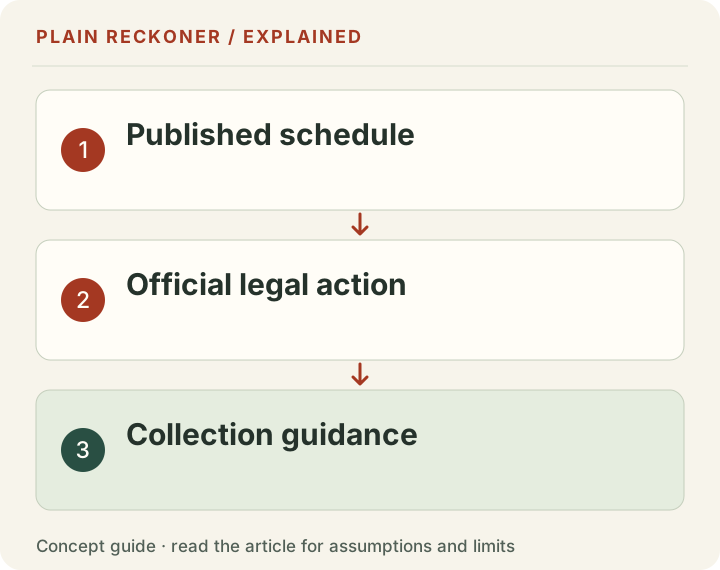
The schedule, the collector and the legal status have different roles
The US International Trade Commission's tariff schedule is a primary source for the published schedule. Customs administration and collection involve other official instructions and authorities. Do not describe one website as doing every part of the process.
A source can be official and still need interpretation alongside another official source. The issue is not that official information should be ignored. It is that a field's meaning and applicability must be checked before turning it into a recommendation.
For a data application, keep a source-role column. Mark which document supplies the classification text, which supplies an effective-date change and which supplies operational guidance. A current webpage date does not replace those relationships.
For a real filing, a source-role table is still only preparation. It is not a binding classification ruling or a guarantee of the treatment CBP will apply. The actual facts and current rules remain essential.
Publication date and effective date are different fields
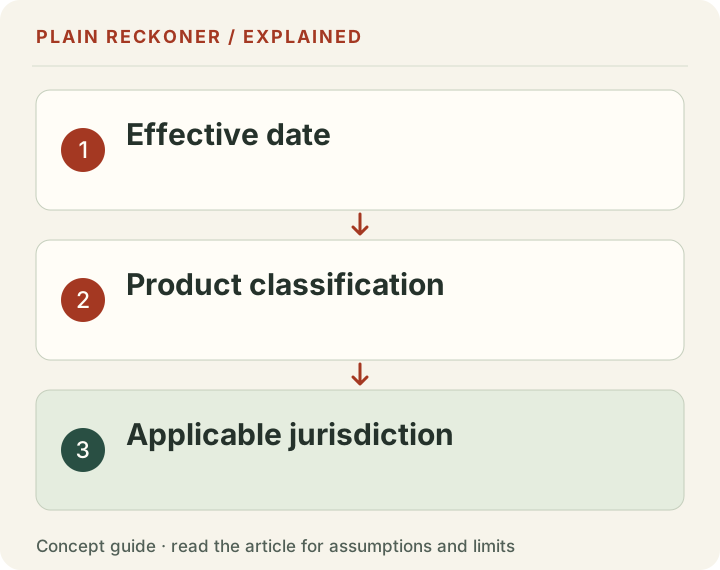
An order can be published on one date and apply to entries meeting a specified time condition. A schedule revision can appear later. A shipment can have several relevant dates, including export, arrival and entry events.
Do not assume the date at the top of a webpage is the date governing every row. Do not assume the newest document applies retroactively to every shipment. The operative text needs to identify the relevant event and timing.
In a research table, preserve both publication date and effective date rather than merge them into a single “updated” column. If the applicable event is unclear, leave it unresolved and refer to the official guidance or professional review.
This is a general lesson for rule-based products. A tax rate, program requirement or contract price can be published today while taking effect later or preserving older treatment for specified cases. Freshness and applicability are different checks.
Product names are not enough for a classification
A broad label such as charger, battery or electronic accessory can cover products with different physical characteristics and intended uses. A supplier's marketing category does not necessarily provide a complete customs classification.
A cost tool should therefore avoid assigning a precise tariff total solely from a broad product name. Ask what evidence supports the classification and which official resources or rulings apply. Keep uncertainty visible rather than choose the code that produces the preferred margin.
The same caution applies to bundles or parts. A store's category structure is designed to help customers browse; it is not automatically the legal classification structure. The appropriate treatment needs the actual product facts.
This article intentionally supplies no replacement percentage for the removed examples. Replacing an unsupported total with another broad category average would repeat the problem. A useful tool can explain the missing evidence without pretending to complete the classification.
Several measures can affect one shipment
A base schedule rate and an additional measure may have different authorities, scopes, exemptions and dates. The end of one named measure does not tell you the total payable under every other applicable provision.
Do not add every percentage found beside a product without checking whether the measures overlap, replace one another or apply under different conditions. Conversely, do not set the total to zero because one measure ended.
For a software model, represent the components separately: source, applicability condition, date range and calculation basis. Keep the final combination unavailable when a required condition is unknown. An exact-looking number built from incompatible measures is not safer than an explicit unresolved result.
Any current duty calculation should follow the official instructions and appropriate expertise for the actual entry. The role of this method guide is to show why a single live table cell cannot supply every part of that decision.
A simple source-status example outside customs
The underlying problem is easier to see in an ordinary service price. A company can publish a $100 rate card while a contract says the new rate begins next month. Looking only at the rate card cannot establish what an existing customer owes today.
A second customer may have a different agreement. A discount might apply only to a named period. The public price is real, but its application depends on another document and the relevant facts.
That chosen example is not a legal analogy establishing tariff treatment. It illustrates the data relationship: a published value, an authority or agreement and an applicability condition. A reliable product preserves all three.
The price-versus-availability note describes another version of the same problem. A valid public number can answer a narrower question than the user intended to ask.
Build a validation record before building a calculator
Start with one explicit question and one defined product or rule case. Save the source version, relevant passage, publication date, effective period and conditions. Record what remains unknown.
Then check the connected documents. If a table refers to a note or another legal instrument, inspect that relationship instead of treating the visible percentage as self-contained. Preserve the chain so another reviewer can reproduce the interpretation.
Keep collection and interpretation separate. Fetching a source successfully verifies reachability and captures its contents. It does not by itself verify the legal conclusion the application draws from those contents.
For high-consequence cases, require a suitable expert review before a user-facing payable figure. A general public-data toolkit should not imply expertise or certainty it does not possess. It can still be valuable by identifying missing inputs and organizing the sources.
Test the dates and unknown states
A rule engine should distinguish a date before an effective change, a date inside a stated period and a date after it. It should also handle missing dates without silently assuming today or a convenient default.
Test source updates separately from legal changes. A file fetched later can contain the same operative text. A changed website label does not automatically mean the underlying rule changed. A revised instrument may matter even if the display table still looks familiar.
Keep conflicting sources explicit. A disagreement should produce a review state rather than an arbitrary choice of whichever source was parsed last. Record which document governs the particular question and why, where that can be established.
These checks protect the software's interpretation. They do not replace current professional determination of a shipment's treatment. The difference belongs next to the result, especially when the calculation could affect a purchasing or import decision.
Maintain history without presenting it as live advice
The August observation remains dated August. This October edit checks source context and improves the explanation. It does not claim to have audited every later legal change or every current chapter 99 entry.
If the project performs a new measurement, it should identify the exact schedule revision, collection time and applicability review. A new dataset version should not quietly overwrite the old observation and leave readers unable to explain a changed result.
Likewise, an old screenshot should not be used to assert that the live schedule is still in the same state. The historical discrepancy is evidence about the recorded source at that time. Present applicability requires present evidence.
That is the general data lesson: an official source, a fresh fetch and a precise percentage can all be genuine while the final interpretation remains incomplete. The missing link is the documented condition that makes the number apply to the user's actual case.
Work through a source conflict without guessing a rate
Consider a chosen review exercise. A researcher captures a schedule page on Monday. A separate official notice describes a change that took effect on the preceding Friday. The page still contains a percentage beside the relevant heading. A supplier sends a quote on Tuesday that appears to include that percentage.
There are now three observations, each useful for a different question. The capture shows what the schedule displayed on Monday. The notice describes an action and its stated timing. The quote shows what the supplier proposed charging. None of those observations alone proves the duty payable on a particular entry.
The reviewer should first identify the transaction facts that are absent: the exact classification, product description, origin, entry date and any relevant exceptions. Next, connect the notice to the affected action and schedule provisions. Then ask whether there is later implementation guidance or another applicable measure. If that chain remains uncertain, the output should say which relationship needs review rather than fill the gap with a confident total.
This is also how a useful free research tool can stop short of becoming an unsafe tax calculator. It can display the source trail, organize dates and help the user prepare a precise question for a qualified customs professional. Producing a smaller, supported answer is more useful than producing a complete-looking number with an unresolved legal assumption.
Keep the evidence table small enough to audit
A practical evidence table needs more than a column called rate. Give each row a source identifier, document title, captured version, observation date, stated effective period and applicability note. Add the particular proposition the source supports. This prevents one authoritative document from becoming a citation for several conclusions it does not actually establish.
For example, an order might support the statement that a named action ended. It may not establish the classification of the reader's product. A schedule capture might support the presence of a row on a date. It may not establish whether a related measure remained collectible. Separate those propositions even when the links appear beside each other in the final article.
Use an explicit unresolved status. A blank applicability cell should not mean zero, valid, invalid or unchanged. It should mean that the review has not established that relationship. If software needs a numeric value to continue, stop the affected calculation and explain the missing fact. Do not quietly convert an unanswered legal question into arithmetic.
Make maintenance part of the published result
Decide what would trigger another review before calling a rules dataset maintained. A new official instrument, a revised schedule, an implementation notice or a discovered classification issue can each require a different update. A successful daily fetch cannot detect every legal relationship by itself.
Give readers a way to identify the version they used. If an older exported file remains available, preserve its date and limits rather than presenting it as the latest guidance. If a source disappears, retain the bibliographic record and explain that its current contents could not be checked. A broken source link and a disproven claim are different problems, and neither should be silently hidden.
The practical takeaway is simple: record the number, the rule that makes it relevant and the facts that connect that rule to the case. When one of those is missing, explain the gap. That discipline is what turns collected public information into evidence a reader can examine.